Best Robot Vacuum With Obstacle Avoidance
Quick Answer
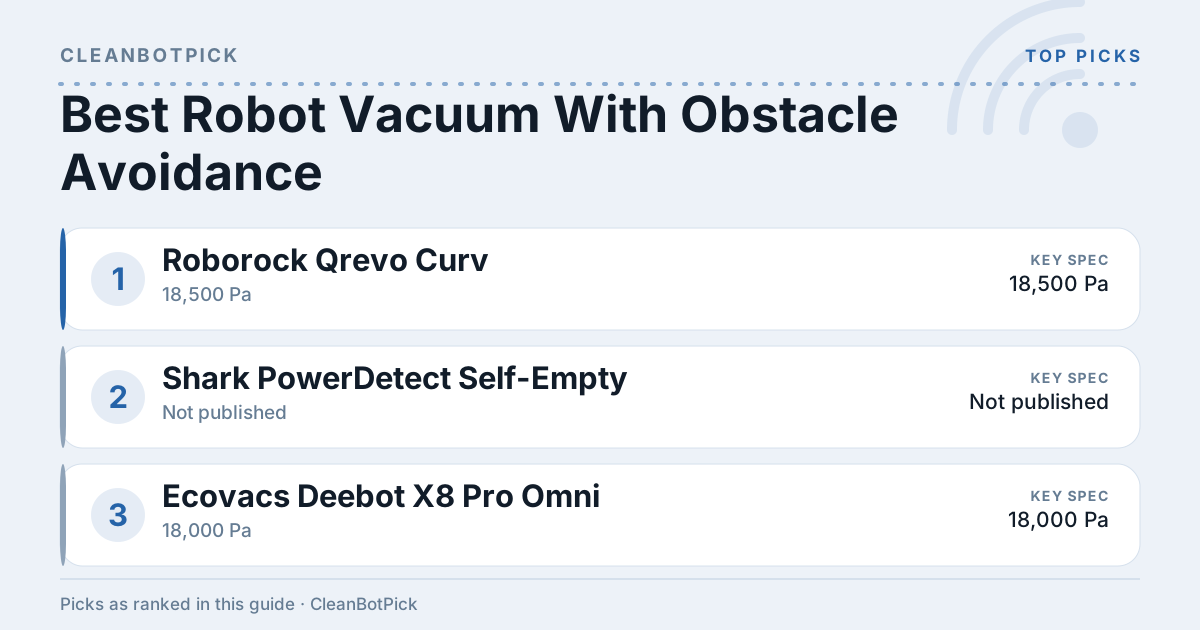
The best robot vacuums with obstacle avoidance are the Roborock Qrevo Curv, Shark PowerDetect Self-Empty, and Ecovacs Deebot X8 Pro Omni. These models use advanced sensors and AI to navigate around furniture and obstacles without getting stuck. Expect to shop the mid-range and premium tiers depending on features, which you can learn more about in our robot vacuum buying guide.
Understanding Obstacle Avoidance Technology
Obstacle avoidance is what separates modern robot vacuums from the bumper-car models of the past. Instead of randomly bouncing off your furniture, these smart vacuums map your space and plan routes around obstacles. The result? Less babysitting and fewer rescue missions from under the couch. It’s also the single most useful feature for households with kids’ toys scattered across the floor.
Key Features of Obstacle Avoidance Robot Vacuums
- Sensors and Cameras: Advanced models combine infrared sensors with cameras to map your home, spot obstacles, and plan efficient cleaning paths.
- AI Learning: Some vacuums get smarter over time, learning your home’s layout and improving their navigation. The newest camera-based systems go further still—see our AI obstacle avoidance picks.
- Avoidance Zones: Set virtual barriers through the app to keep your vacuum away from certain areas entirely.
Top Robot Vacuums with Obstacle Avoidance
1. Roborock Qrevo Curv
- Key Spec: 18,500 Pa suction power
- Filter Type: E11-rated filter
- Room Size: Ideal for medium to large spaces
- Price Tier: Premium
Pros:
- Excellent obstacle avoidance with Reactive AI
- Self-emptying dock that also washes and dries the mop with hot water
- AdaptiLift chassis climbs thresholds that strand other robots
Cons:
- Higher price point
- The dock is tall and needs real floor space
This one’s the gold standard for pet owners. The Qrevo Curv can identify and steer around pet waste—a feature that’ll save you from some truly unpleasant cleanup scenarios. The self-emptying dock is worth the premium if you hate dealing with dustbins.
2. Shark PowerDetect Self-Empty
- Key Spec: LiDAR navigation with 3D object detection
- Filter Type: HEPA filter
- Room Size: Suitable for larger homes
- Price Tier: Budget
Pros:
- 3D object detection that genuinely spots socks and charging cables
- 30-day HEPA self-empty base
- Straightforward app that doesn’t need a manual
Cons:
- Vacuum only—no mopping
- Shark doesn’t publish a suction figure
The PowerDetect surprised me with how consistently it spots clutter on the floor. It’s vacuum-only, so if you want mopping in the same machine, start with our guide on robot vacuum and mop combos. It’s the best value in this lineup.
3. Ecovacs Deebot X8 Pro Omni
- Key Spec: 18,000 Pa suction power
- Filter Type: High-efficiency filter
- Room Size: Best for large spaces
- Price Tier: Premium
Pros:
- Excellent obstacle detection with AIVI 3D recognition
- OZMO roller mop that rinses itself as it cleans
- Strong app connectivity for custom cleaning schedules
Cons:
- Can be noisy during operation
- Takes time to fully understand mapping features
The X8 Pro Omni has impressive 3D obstacle detection, but it’s noticeably louder than the competition, which is a consideration discussed in our article on the best quiet robot vacuums. The learning curve is steeper too—expect to spend some time tweaking settings before it runs smoothly.
Comparison Table
| Product | Suction | Filter Type | Room Size | Price Tier |
|---|---|---|---|---|
| Roborock Qrevo Curv | 18,500 Pa | E11-rated | Medium to large | Premium |
| Shark PowerDetect Self-Empty | Not published | HEPA | Larger homes | Budget |
| Ecovacs Deebot X8 Pro Omni | 18,000 Pa | High-efficiency | Best for large spaces | Premium |
Practical Tips for Choosing the Right Robot Vacuum
- Evaluate Your Space: Larger homes need stronger suction and better mapping. Don’t waste money on premium features if you live in a studio apartment.
- Check Battery Life: Most quality models run 90-150 minutes per charge. Anything less will frustrate you in larger spaces.
- App Connectivity: A clunky app ruins the whole experience. Read reviews specifically about the mobile interface.
- Maintenance Requirements: Self-cleaning features cost more upfront but save time long-term. Factor this into your decision.
- Customer Reviews: Skip the five-star gushing and focus on three-star reviews—they’re usually the most honest about real-world performance.
FAQ
What is obstacle avoidance technology in robot vacuums?
It’s the tech that lets robot vacuums detect and navigate around obstacles instead of just bumping into everything like a drunk roommate.
How effective are robot vacuums with obstacle avoidance?
Modern models are quite good at it. You’ll still find the occasional sock casualty, but they’re vastly better than older bump-and-go models.
Can robot vacuums clean multiple rooms?
Yes, models with advanced mapping can navigate between rooms and return to charge automatically. Just make sure doorway thresholds aren’t too high.
Do I need to set up barriers for robot vacuums?
Not always, but virtual barriers help protect delicate items and keep the vacuum out of problem areas. Think of them as insurance.
How often should I run my robot vacuum?
Daily for pet owners, every other day for most households. High-traffic homes might need daily runs regardless.
Bottom Line
The Shark PowerDetect offers the best bang for your buck, as long as you don’t need mopping in the same machine. Pet owners should seriously consider the pricier Roborock Qrevo Curv for its waste-avoidance feature, as highlighted in our post about the best robot vacuum for pet hair. I’d skip the Deebot X8 Pro Omni unless you specifically need its 3D recognition—the noise and complexity aren’t worth it for most people.